
VERTICAL REFERENCE LONG LINE TRAINING
INDUSTRY STANDARD TRAINING


Train where the work is
Utility flying doesn’t happen over flat ground. It happens on ridgelines, in canyons, on slopes, in wind and at density altitude — and that’s where this course is flown, from the first hour. You’ll learn vertical reference in the Cascade foothills and the Columbia River Gorge, on terrain chosen because it looks like the job sites you’ll be working. Ten focused hours here build habits that transfer directly to the line, which is the point.
Who it’s for
Commercial pilots moving into utility work. Operators adding external-load capability and needing a pilot trained. Pilots who need documented, instructed long line time before an employer will put them on a hook. And pilots who just want to find out whether this kind of flying is for them.
How the course runs
Day 1 — Ground school and first flights. Rigging and hardware, hook systems and releases, load behavior and oscillation, ground-crew communications, Part 133 and the operator’s responsibilities, risk assessment for external-load work. R44 checkout and SFAR 73 awareness training as needed. First vertical reference flights: sight picture, body position, small inputs.
Days 2–3 — Flying the line. Vertical reference on the 150 ft line, then progressively shorter lines down to the belly hook. Pick and placement on flat sites, then sloped and confined sites. Reading the load, damping oscillation, working with a ground crew.
Days 4–5 — Terrain and precision. Ridge and canyon sites, wind and density-altitude effects, precision placement to a marked target, repeated sets on real-world-style sites: forms, poles, brush bundles. Bambi bucket module can be added here.
Between flights you’ll rig, hook and work the ground so you understand both ends of the line.
Instructor
Ryan Gervelis — owner and chief pilot of Raven Aircraft; ATP rotorcraft-helicopter; A&P mechanic; thousands of hours of external-load and long line time, currently flying utility, fire, SAR and agricultural work. You train with the person who does the job, not a syllabus.
Aircraft and location
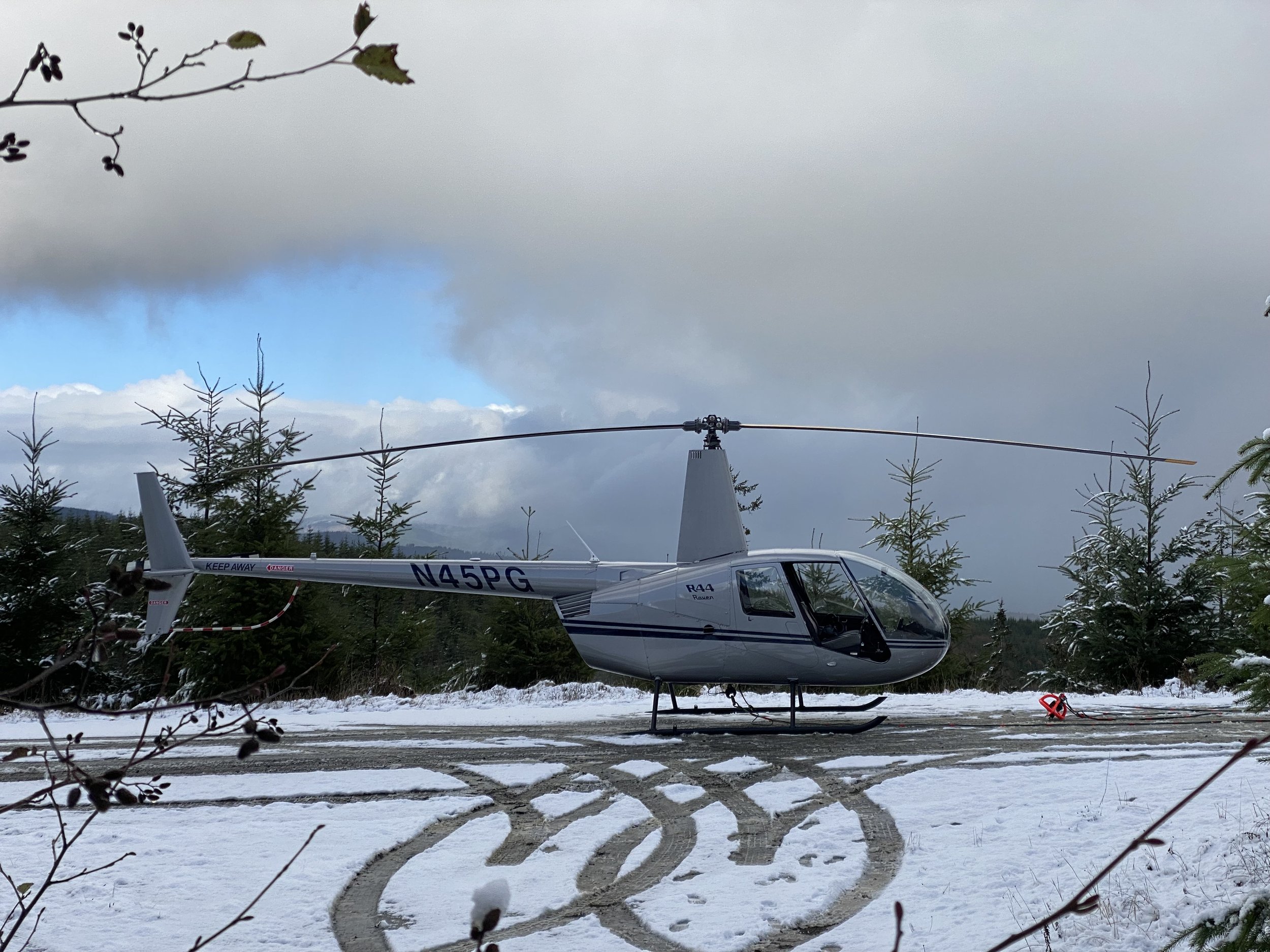
Robinson R44 Raven I, operating out of Grove Field (1W1), Camas, Washington — 30 minutes from Portland International (PDX). Training areas in the Cascade foothills and the Gorge.
Lodging
Two options, both close to the airport. A private room and bath at the instructor’s home in Camas, which students have used before — ask about availability when you book. Or the Camas Hotel in downtown Camas, ten minutes from Grove Field.
Prerequisites
A rotorcraft-helicopter pilot certificate. That’s it — you don’t need prior long line or R44 experience to try it. The required SFAR 73 awareness training and an R44 checkout are covered in the course.
What you leave with
A signed training record documenting ground and flight hours, maneuvers, line lengths and site types, and a letter of completion for your employer.
Pricing
Full course: $12,000. Includes 10 flight hours in the R44, ground and classroom instruction, and training on the 150 ft line down to the belly hook. Bambi bucket module available at additional cost. A 10% deposit reserves your course dates; the balance is due before the first flight. No hidden fees, no “call for pricing.”
Ask about the next course date
Call (808) 268-3889 or use the contact form and tell us your certificate level and when you’d like to train.